
Quick Info
On April 17, 1897, the small town of Aurora, Texas (about 30 miles northwest of Fort Worth), reportedly experienced a spectacular crash when a cigar-shaped "airship" collided with Judge J.S. Proctor's windmill at around 6 a.m. The craft exploded, scattering debris over several acres, wrecking the windmill and water tank, and destroying the judge's flower garden.
The pilot was killed and described as "not of this world" – speculated to be a Martian by a local U.S. Signal Service officer. Papers in unknown hieroglyphics were found in the wreckage, and the metal was a strange alloy unlike aluminum or silver. The body was allegedly buried in the Aurora cemetery the next day. The story appeared in the Dallas Morning News on April 19, 1897, written by local correspondent S.E. Haydon.
It was part of the 1896–1897 mystery airship wave across the U.S., but Aurora is unique for claiming a crash and burial. Modern consensus: likely a hoax by Haydon to boost a struggling town; no physical evidence, no corroborating witnesses, missing tombstone. Still a beloved pre-Roswell legend.
Timeline of Events – April 1897
Based on the Dallas Morning News article (April 19, 1897) by S.E. Haydon – the only contemporary source. No other newspapers reported it at the time.
- Early morning April 17, 1897 6:00 a.m. Residents of Aurora awakened by a loud crash. A cigar-shaped airship, seen earlier flying over the public square at low altitude, collides with Judge J.S. Proctor's windmill tower. It explodes with terrific force, scattering debris over several acres, destroying the windmill, water tank, and Proctor's flower garden. The craft is described as "much nearer the earth than ever before," traveling north at slow speed (10–12 mph), suggesting mechanical trouble.
- Immediately after crash Townspeople rush to the scene. The pilot's body is recovered from the wreckage – badly disfigured, "not an inhabitant of this world." A local U.S. Signal Service officer (T.J. Weems) speculates it is "a native of the planet Mars." Papers in the wreckage written in "some unknown hieroglyphics" – undecipherable. Metal described as strange alloy, neither aluminum nor silver.
- April 18, 1897 Funeral plans announced for "tomorrow" (April 19). Body to be buried in Aurora cemetery. No further official action or investigation mentioned.
- April 19, 1897 S.E. Haydon's article appears in Dallas Morning News under headline "A Windmill Demolishes It." Story spreads regionally but not nationally at the time.
- Post-1897 Incident fades from attention. Aurora declines (cotton crop failure, railroad bypass). No follow-up reports, no grave marker survives (later claimed stolen or removed).
What the Newspaper Article Said
The Dallas Morning News piece by S.E. Haydon (April 19, 1897) is the sole primary source. Key excerpts (paraphrased/quoted):
"About 6 o'clock this morning the early risers of Aurora were astonished at the sudden appearance of the airship which had been sailing through the country. It was traveling due north, and much nearer the earth than ever before. Evidently some of the machinery was out of order, for it was making a speed of only ten or twelve miles an hour and gradually settling toward the earth. When it reached the north part of town it collided with the tower of Judge Proctor's windmill and went to pieces with a terrific explosion, scattering debris over several acres of ground, wrecking the windmill and water tank and destroying the judge's flower garden."
"The pilot of the ship is supposed to have been the only one aboard, and while his remains are badly disfigured, enough of the original has been picked up to show that he was not an inhabitant of this world. T.J. Weems, the U.S. Signal Service officer at this place and an authority on astronomy, gave it as his opinion that he was a native of the planet Mars."
"Papers found on his person are written in some unknown hieroglyphics and cannot be deciphered. The ship was too badly wrecked to form any conclusion as to its construction or motive power. The town is full of people to-day who are viewing the wreck and gathering specimens of strange metal from the debris. The pilot's funeral will take place tomorrow."
While reading about this event online I seen a few people mention the Pilot could of been Asian and the "hieroglyphics" could of been Japanese or Chinese writing, but who knows.
Modern Investigations & Hoax Consensus
By the 1970s–80s, UFO researchers (MUFON, Time magazine 1980) revived the story. Skeptics found: no other 1897 newspaper corroboration (Fort Worth Register silent), no cemetery records or surviving tombstone (later called "Tomb of the Unknown Airman" or alien symbols, but gone by 1970s – possibly stolen). Etta Pegues (86 in 1980) said Haydon made it up as a joke to boost Aurora (dying town after cotton failure, railroad bypass).
MUFON 1979 dig found windmill base near well (refuting "no windmill" claim), but no debris or alien remains. Well sealed in 1950s. No physical evidence ever surfaced. Consensus: hoax by Haydon for attention/sales. Part of 1896–1897 airship flap (likely misidentified airships, hoaxes, or balloons).
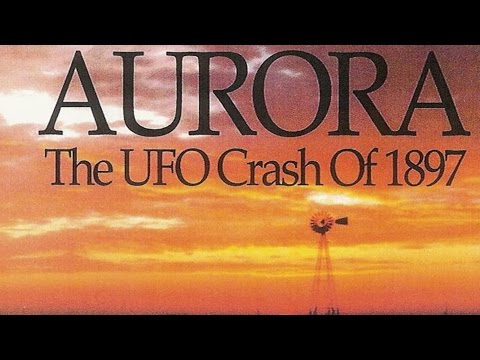
Great full video on the Aurora Event feat. the late great Jim Marrs.
More videos on the Pascagoula abduction
Legacy in 2026
Over 129 years later, Aurora's "Martian crash" is Texas's pre-Roswell legend. Annual UFO festivals, "Ned" (alien nickname) lore, cemetery visits. Town embraces it for tourism despite hoax status. Featured in books, documentaries, podcasts. In 2026 UAP era, some still wonder if Haydon embellished a real event. No physical evidence of this event reamins today, but the story endures as a great 19th-century UFO mystery.
